


Try Our After Easter Quiz

“The hand that rocks the cradle still fraternizes with destiny.” Read more HERE

What Is The Urantia Book?
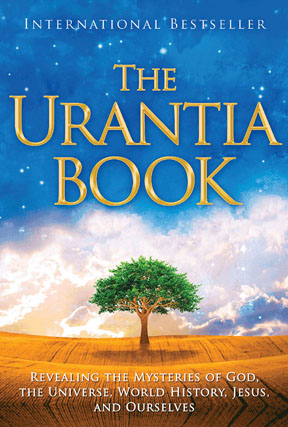
The Urantia Book includes the origin, history, and destiny of humanity. It answers questions about God, life in the inhabited universe, science, astronomy, the history and future of this world, Adam and Eve, and it includes an uplifting and greatly expanded narrative of the life and teachings of Jesus. This narrative of Jesus’ life is sourced from spiritual beings who were present during Jesus’ life and who have preserved these records for presentation in The Urantia Book and in our modern times.
The Urantia Book describes an endless destiny for humankind, teaching that living faith is the key to personal spiritual progress and eternal survival as an immortal being.
 Urantia (pronounced: you ran chah) is the universe name for Earth. The word Urantia translates to “your place in the universe.” Urantia is the sentimental shrine of all Nebadon (the name of our universe). Urantia is but one planet of ten million inhabitable worlds and is the mortal home of Christ Michael (Jesus of Nazareth), sovereign creator and ruler of all we see.Read More.
Urantia Book Teachings
Urantia Book teachings about Motherhood
The early home was founded upon … that devoted mother love of the human female, which in measure she shares with the females of all the higher animals. HERE


Read more about Jesus HERE.
Read Book Reviews:
An Authentic Revelation
“This has been the greatest spiritual book I’ve ever read in my entire life. I implore you to give it a chance to open your mind and deepen your soul. Your day to day life will never be the same after you read about the life of Jesus. It’s more amazing and touching than I ever imagined.”
Read More Reviews and Buy the Book
Mary, the mother of Jesus
Mary, in spite of the cult of worship that bears her name, was a fairly ordinary woman, but an ordinary woman called to perform extraordinary service to our planet and our universe. HERE


The Strange Power of Laughter
/in Trending Now!On the website Sapiens.org, an anthropologist explores laughter as a far more complex phenomenon than simple delight—reflecting on its surprising power to disturb and disrupt. Read More
The Urantia Book says, “Joyful mirth and the smile-equivalent are as universal as music. There is a morontial and a spiritual equivalent of mirth and laughter.”
Read HERE Urantia Book teachings about the importance of laughter and humor – both in this life, and into our eternal career
Other reference: One of the functions of humor is to help all of us take ourselves less seriously. “Humor is the divine antidote for exaltation of ego.”